
Urban landscapes are planned outdoor spaces in cities and towns. They include parks, streets, gardens, plazas, rooftops, and green areas around buildings. These landscapes combine nature and city structures to improve how people live, move, and relax in urban areas.

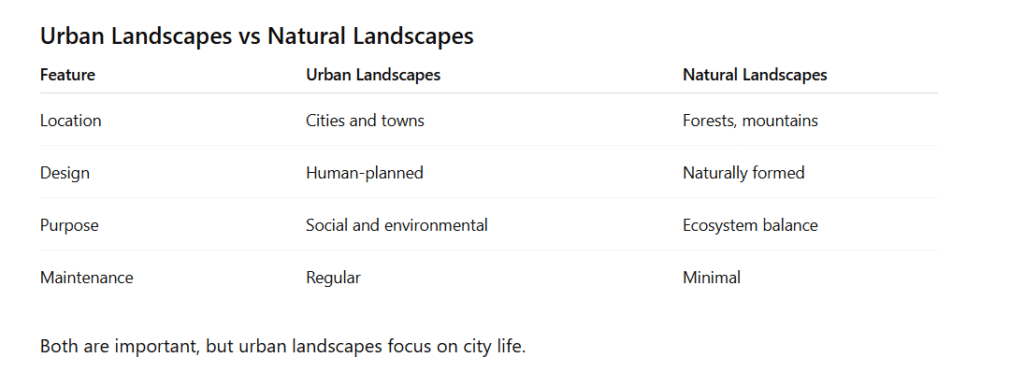
Unlike natural landscapes such as forests or mountains, urban landscapes are designed and managed by people. They are created to support daily life, protect the environment, and make cities more beautiful and comfortable.
Simple Definition of Urban Landscapes
In simple words, an urban landscape is any outdoor space in a city that is designed for people and nature.
This can be as big as a city park or as small as a tree planted along a street.
Examples of Urban Landscapes
Common examples include:
- Public parks and city gardens
- Street trees and sidewalks
- Town squares and plazas
- Rooftop gardens and green roofs
- Riverfront walkways
- Playgrounds and sports fields
- Courtyards between buildings
- Urban farms and community gardens
Even a small green area in a busy city is part of the urban landscape.
Key Elements of Urban Landscapes
Urban landscapes are made up of hard landscaping and soft landscaping elements.
Hard Landscaping Elements
These are built or man-made features:
- Pavements and roads
- Benches and seating areas
- Walls, fences, and steps
- Street lighting
- Drainage systems
Soft Landscaping Elements
These include living and natural features:
- Trees and shrubs
- Grass and lawns
- Flower beds
- Plants and hedges
- Water features
A good urban landscape balances both hard and soft elements.
Why Are Urban Landscapes Important?
Urban landscapes play a vital role in modern cities.
1. Improve Quality of Life
Green spaces help people relax, exercise, and spend time outdoors.
2. Support Mental and Physical Health
Parks and green areas reduce stress, improve mood, and encourage walking and outdoor activities.
3. Reduce Air and Noise Pollution
Trees absorb pollution and reduce traffic noise.
4. Control Urban Heat
Plants cool cities by reducing heat from concrete and asphalt.
5. Manage Rainwater and Flooding
Green areas absorb rainwater and reduce surface flooding.
6. Increase Property Value
Well-designed urban landscapes make neighborhoods more attractive and valuable.
Urban Landscape Design
Urban landscape design is the process of planning, creating, and managing outdoor city spaces.
Designers consider:
- Safety and accessibility
- Climate and weather
- Local culture and lifestyle
- Traffic and pedestrian movement
- Sustainability and maintenance
The goal is to create spaces that are functional, attractive, and easy to maintain.
Sustainable Urban Landscapes
Modern cities focus on sustainable urban landscaping to protect the environment.
Common sustainable practices include:
- Using native plants
- Installing green roofs and vertical gardens
- Rain gardens and permeable paving
- Low-water irrigation systems
- Recycling materials
Sustainable urban landscapes reduce costs and environmental damage.
Urban Landscapes in the UK
In the UK, urban landscapes often focus on:
- Public parks and heritage gardens
- Tree-lined streets
- Riverfront regeneration projects
- Community green spaces
Cities like London, Manchester, and Birmingham use urban landscaping to improve air quality and public health.
UK councils also promote eco-friendly landscaping to meet climate goals.
Who Plans and Maintains Urban Landscapes?
Urban landscapes are created and managed by:
- Landscape architects
- Urban planners
- Local councils and governments
- Landscaping companies
- Environmental designers
They work together to keep cities green and functional.
Challenges in Urban Landscaping
Urban landscaping faces several challenges:
- Limited space
- High maintenance costs
- Pollution and soil quality
- Climate change
- Heavy foot traffic
Good planning helps overcome these problems.
Future of Urban Landscapes
The future of urban landscapes includes:
- Smart city landscaping
- Vertical gardens and green walls
- Climate-resilient plants
- Community-driven green spaces
As cities grow, urban landscapes will become even more important.
FAQs
What is an urban landscape in simple terms?
An urban landscape is a designed outdoor space in a city, such as a park or street with trees.
Are urban landscapes only parks?
No, they include streets, rooftops, plazas, and small green areas.
Why are urban landscapes important for cities?
They improve health, reduce pollution, and make cities nicer to live in.
Can urban landscapes be eco-friendly?
Yes, with native plants and sustainable design.
Who designs urban landscapes?
Landscape architects and urban planners.
Conclusion
Urban landscapes are essential for healthy and livable cities. They bring nature into urban areas, support health, protect the environment, and improve daily life.