
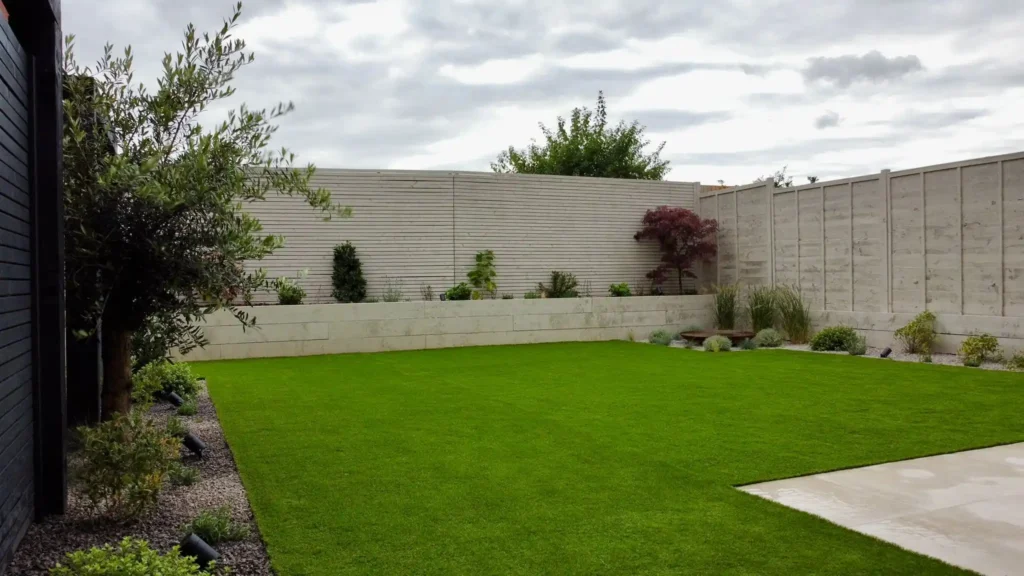
Sodding is a landscaping method where ready-grown grass is placed on soil to create a green lawn quickly. Instead of planting grass seeds and waiting weeks or months, sodding gives you an instant lawn.
In landscaping, sodding is often used for homes, parks, schools, offices, and sports fields because it looks neat right away and helps protect the soil.
This article explains what sodding is, how it works, its benefits, cost, maintenance, and how it compares to seeding, in a clear and easy way.
What Is Sod?
Sod is grass that is already grown with its roots, soil, and nutrients attached. It is cut into rolls or square pieces and delivered to the site.
Sod usually includes:
- Healthy grass blades
- A thin layer of soil
- Strong root system
Once laid on prepared ground and watered, the grass roots grow into the soil below.
What Does Sodding Mean in Landscaping?
In landscaping, sodding means installing sod to create a lawn or grassy area. It is a finishing step that makes outdoor spaces look complete and attractive.
Landscapers use sodding to:
- Create lawns fast
- Fix damaged grass areas
- Control soil erosion
- Improve curb appeal
Sodding is common in both residential and commercial landscaping projects.
How Does the Sodding Process Work?
1. Soil Preparation
The old grass, weeds, and rocks are removed. The soil is loosened and leveled so roots can grow easily.
2. Soil Improvement
Compost or fertilizer may be added to improve soil quality and drainage.
3. Laying the Sod
Sod pieces are placed tightly together like puzzle pieces. Gaps are avoided to prevent drying.
4. Watering
The sod is watered immediately to keep roots moist and help them attach to the soil.
5. Aftercare
For the first few weeks, regular watering is very important.
Types of Grass Used for Sodding
Different grasses are used depending on climate and use.
Cool-Season Grasses
Best for cooler areas.
- Kentucky bluegrass
- Fescue
- Ryegrass
Warm-Season Grasses
Best for warmer climates.
- Bermuda grass
- Zoysia grass
- St. Augustine grass
Choosing the right grass helps the lawn stay healthy longer.
Benefits of Sodding in Landscaping
Instant Green Lawn
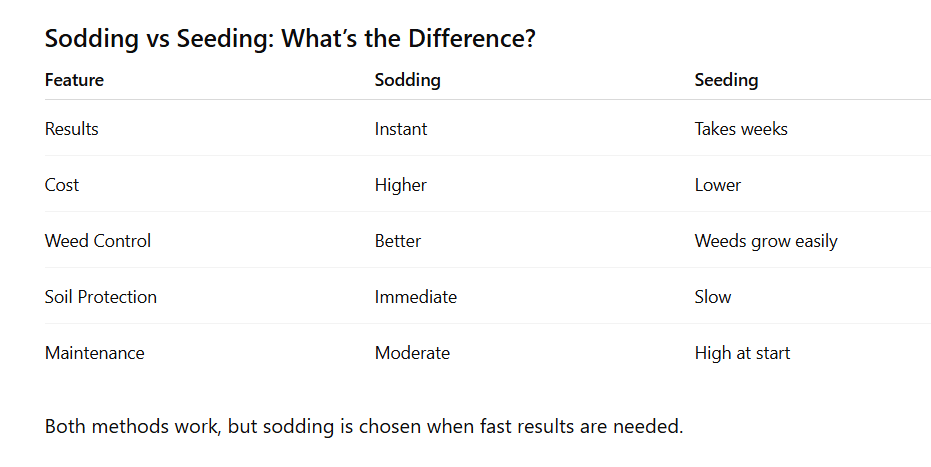
Sodding gives a finished look immediately, unlike seeding.
Faster Results
A seeded lawn can take months. Sod looks good the same day.
Prevents Soil Erosion
Sod holds soil in place, especially on slopes or hills.
Fewer Weeds
Since sod is thick and mature, weeds have less space to grow.
Adds Property Value
A green lawn improves curb appeal and home value.
Where Is Sodding Commonly Used?
Sodding is used in many landscaping projects, such as:
- Home lawns
- Front gardens
- Parks and playgrounds
- Sports fields
- Commercial buildings
- Roadside landscaping
It is especially useful where grass must grow quickly.
How Much Does Sodding Cost?
The cost of sodding depends on:
- Lawn size
- Type of grass
- Soil preparation
- Labor costs
On average, sodding costs more than seeding, but it saves time and gives better short-term results.
How to Take Care of a New Sod Lawn
Watering
Water daily for the first 2–3 weeks. Keep soil moist but not flooded.
Mowing
Wait until the grass is firmly rooted before mowing.
Fertilizing
Apply fertilizer after a few weeks if needed.
Avoid Foot Traffic
Do not walk on new sod until roots are strong.
Good care helps sod last for many years.
Common Problems with Sodding
- Drying due to poor watering
- Gaps between sod pieces
- Uneven ground
- Wrong grass type for climate
These problems can be avoided by proper installation and care.
Is Sodding Eco-Friendly?
Sodding can be eco-friendly when:
- Native grass types are used
- Watering is managed properly
- Soil health is maintained
It also helps reduce dust, soil erosion, and heat.
Is Sodding Right for Your Landscape?
Sodding is a good choice if you:
- Want a lawn quickly
- Are selling a property
- Need erosion control
- Want a clean and professional look
If budget is limited and time is not an issue, seeding may be better.
FAQs About Sodding in Landscaping
What is sodding in simple words?
Sodding means placing ready-grown grass on soil to make a lawn quickly.
How long does sod take to root?
Most sod takes 2–3 weeks to root if watered properly.
Can sod be installed anytime?
Spring and early fall are best, but it depends on the climate.
Is sod better than seed?
Sod is faster and cleaner, but seed is cheaper.
How long does sod last?
With good care, sod can last many years.
Conclusion
Sodding in landscaping is one of the fastest and most effective ways to create a green lawn. It provides instant beauty, protects soil, and improves outdoor spaces.
While it costs more than seeding, the results are quicker, cleaner, and more reliable. With proper care, a sodded lawn can stay healthy and beautiful for a long time.
If you want a professional and finished landscape look, sodding is an excellent choice.